
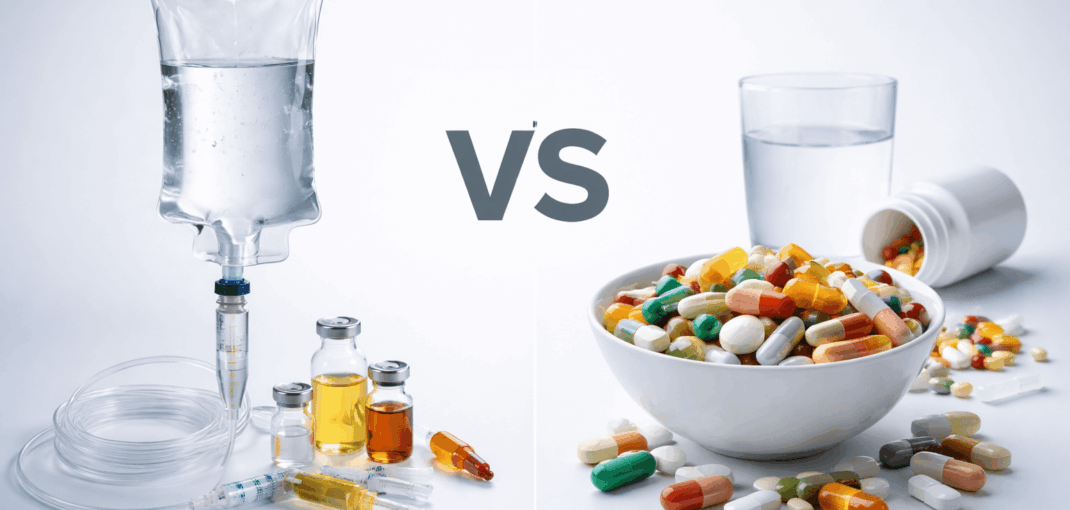
IV Therapy vs Oral Supplements: Which Works Better?
Comparing IV therapy vs oral supplements is a practical way to choose the right option for hydration, nutrient support, and wellness goals. Both can play a role, but they deliver vitamins and minerals differently, which affects absorption, speed, convenience, and risk. If you’re trying to decide what fits your needs, it helps to understand how nutrients enter the body and what can limit their effectiveness.
In this guide, we’ll break down how each approach works, when each may make sense, and how to weigh the trade-offs. We’ll also cover safety considerations, common misconceptions, and what to ask before you start. If you’re considering professional support, you can explore options on our IV hydration and injections page.
How the Body Absorbs Nutrients from Oral Supplements
Oral supplements (tablets, capsules, powders, gummies) must travel through the digestive system before nutrients reach your bloodstream. After you swallow a supplement:
It breaks down in the stomach and intestines
Nutrients are absorbed through the small intestine
They enter the portal circulation to the liver
The liver metabolizes some nutrients before they circulate system-wide (often called “first-pass” processing)
This process is normal physiology, but it means absorption can vary widely from person to person. Factors that influence oral absorption include the nutrient form (e.g., citrate vs oxide for magnesium), dose, whether you take it with food, the presence of fat for fat-soluble vitamins, and your overall gut function. A practical overview of how bioavailability is influenced by nutrient form, diet matrix, and interactions is discussed in the nutrition literature (Richards, 2025).
Why oral supplement effectiveness varies
Oral supplements can be highly effective for many people, especially when:
The dose is appropriate
The product quality is reliable
Digestion and absorption are functioning well
Use is consistent over time
But oral products can also be inconsistent. National guidance notes that supplements are regulated differently from medications and do not go through the same pre-market approval pathway as drugs (NIH Office of Dietary Supplements, 2023). The FDA also explains that it generally does not approve dietary supplements or their labeling claims before they’re sold (FDA, 2024).
That doesn’t mean supplements “don’t work.” It means outcomes depend on product quality, proper use, and whether your body can absorb what you take.
How IV therapy delivers nutrients differently
IV therapy delivers fluids (and, when appropriate, vitamins or minerals) directly into a vein. This bypasses digestion entirely and places nutrients directly into systemic circulation.
Because IV nutrients do not need to be dissolved, absorbed through the gut lining, or processed through first-pass metabolism, delivery is immediate. This is the core reason many people consider IV therapy when they want more rapid hydration support or when oral intake is not ideal.
It’s important to keep expectations realistic. Even though delivery is direct, “better” still depends on:
What you’re trying to address (hydration vs long-term nutrient status)
Whether you have an actual deficiency
The formulation and dose
Your baseline health status and medical history
Medical experts have also cautioned that for people with normal nutritional intake and normal levels, evidence of broad benefit from elective IV vitamin therapy is limited and there can be risks (Mayo Clinic , 2024).
IV Therapy vs Oral Supplements Side-by-Side Comparison
1) Absorption and Bioavailability
| Factor | Oral Supplements | IV Therapy |
|---|---|---|
| How nutrients enter the body | Must pass through digestion before entering bloodstream | Delivered directly into bloodstream |
| First-pass metabolism | Yes, processed by liver before systemic circulation | No, bypasses digestive tract and liver processing |
| Bioavailability | Varies by nutrient form, dose, gut health, and food interactions | Typically higher during infusion because nutrients enter circulation immediately |
| Influencing factors | GI conditions, medications, stomach acid, nutrient form | Dependent on proper administration and formulation |
2) Speed: How Fast You May Notice Effects
| Factor | Oral Supplements | IV Therapy |
|---|---|---|
| Onset of effect | Gradual, builds over time | Immediate delivery during infusion |
| Best suited for | Long-term nutrient support | Rapid hydration or short-term support |
| Perceived results | May take days to weeks | Some individuals report same-day effects |
3) Convenience and Routine Fit
| Factor | Oral Supplements | IV Therapy |
|---|---|---|
| Location | Easy at-home routine | Requires a visit and time for administration |
| Time commitment | Minutes per day | Often 30–60 minutes per session |
| Cost structure | Lower cost per serving | Higher per session |
| Frequency | Often daily | Usually periodic, not daily |
4) Predictability and Quality Control
| Factor | Oral Supplements | IV Therapy |
|---|---|---|
| Regulation | Not FDA-approved before sale; regulated as supplements | Medical procedure requiring clinical oversight |
| Quality variability | Can vary by brand and labeling accuracy | Depends on provider standards and sterile technique |
| Safety considerations | Overuse risk, interactions, variable product quality | Venous access and infection prevention are essential |
What to Know Before Choosing Either Approach
Oral supplements can cause problems when:
Doses are unnecessarily high
Multiple products overlap (e.g., multivitamin + separate vitamin D + “immunity blend”)
Supplements interact with prescription medications
Because supplements are regulated differently than medications, your safest move is to review labels carefully and check in with a clinician if you’re pregnant, managing chronic conditions, or taking prescription drugs (FDA, 2024).
IV therapy can be safe when properly administered, but it is not “risk-free.” It involves:
Venipuncture (a needle entering a vein)
Potential for bruising or irritation
A small but real infection risk if sterility is compromised
While hospital-focused central line guidance is not the same as wellness IV access, clinical guidelines reinforce how important catheter care and infection prevention are when intravenous access is used in medical settings (Pittiruti et al., 2009). The practical takeaway for consumers is simple: choose settings with appropriate medical oversight, sterile technique, and screening.
What “Works Better” Depends On Your Goal
If your goal is long-term nutritional maintenance
Oral supplements often fit better. They’re easier to take consistently, typically lower cost, and align well with routine wellness habits.
If your goal is rapid hydration support
IV therapy may fit better, especially when quick fluid and electrolyte delivery is the priority.
If your goal is correcting a real deficiency
Either approach may be appropriate depending on:
Severity of deficiency
Ability to absorb orally
Medical guidance and monitoring
Because over-supplementation can be harmful, deficiency correction is best guided by lab testing and clinician recommendations rather than guesswork (NIH Office of Dietary Supplements, 2023).
Frequently Asked Questions
1. Is IV therapy more effective than oral supplements?
IV therapy delivers nutrients directly into the bloodstream, which allows for immediate absorption during the infusion. Oral supplements must pass through the digestive system before nutrients are absorbed. The more effective option depends on your health goals, digestive function, and whether you need rapid support or long-term maintenance.
2. How long does it take to notice results from IV therapy?
Some individuals report feeling hydration or energy support the same day, particularly when dehydration is a factor. However, results vary based on individual health status, nutrient levels, and overall lifestyle factors. IV therapy is not a substitute for proper nutrition, sleep, and routine wellness habits.
3. Can oral supplements provide the same benefits as IV therapy?
For many people, oral supplements can effectively support long-term nutrient intake when used consistently and appropriately. However, absorption may vary depending on digestive health, medication use, and nutrient form. IV therapy may be considered when faster delivery or digestive bypass is preferred.
4. Is it safe to combine IV therapy and oral supplements?
In some cases, a combination approach may be appropriate. Oral supplements may support daily maintenance, while IV therapy may be used periodically for targeted hydration or nutrient support. It’s important to avoid excessive dosing and consult a qualified professional before combining therapies.
5. Where can I find IV therapy in Saraland, AL?
If you’re looking for professionally administered IV therapy in Saraland, AL, you can review local clinic information, hours, and verified patient details through the clinic’s official Google Business Profile. This can help you confirm location details and learn more before scheduling an appointment.
The Bottom Line
IV therapy vs oral supplements isn’t a one-size-fits-all decision. Oral supplements can be an effective, convenient option for daily maintenance when absorption is healthy and product quality is reliable. IV therapy can be useful when hydration support needs to be more immediate or when oral intake isn’t ideal. The best choice comes down to your goals, your health context, and professional guidance.
If you want to learn more about options for hydration support, you can visit our IV hydration and injections or browse more educational posts in our blog page.